8 ways that travel to Europe has changed since the UK left the EU
""

Okay. So the UK has now left the EU – but what can you expect when travelling to the European member states from 1st January 2021?

The UK will no longer be treated like a member of the EU, and is subject to new rules.

Once the COVID situation is under control and UK citizens are generally allowed to travel abroad again, you’ll need to be aware of these 8 changes when travelling to any EU countries (plus Switzerland, Norway, Iceland and Liechtenstein).

Planning your trip…

1. How long you can stay

Most British travellers spend a few weeks at time abroad, however if you are thinking of spending longer you need to be aware that you’ll only be able to stay in an EU country for up to 90 days in any 180-day period. If you want to stay longer, you’ll need the right to remain/visa. The rules for Bulgaria, Croatia, Cyprus and Romania are different – as you can be there for 90-days and not use up your 90-day allowance for other EU countries.

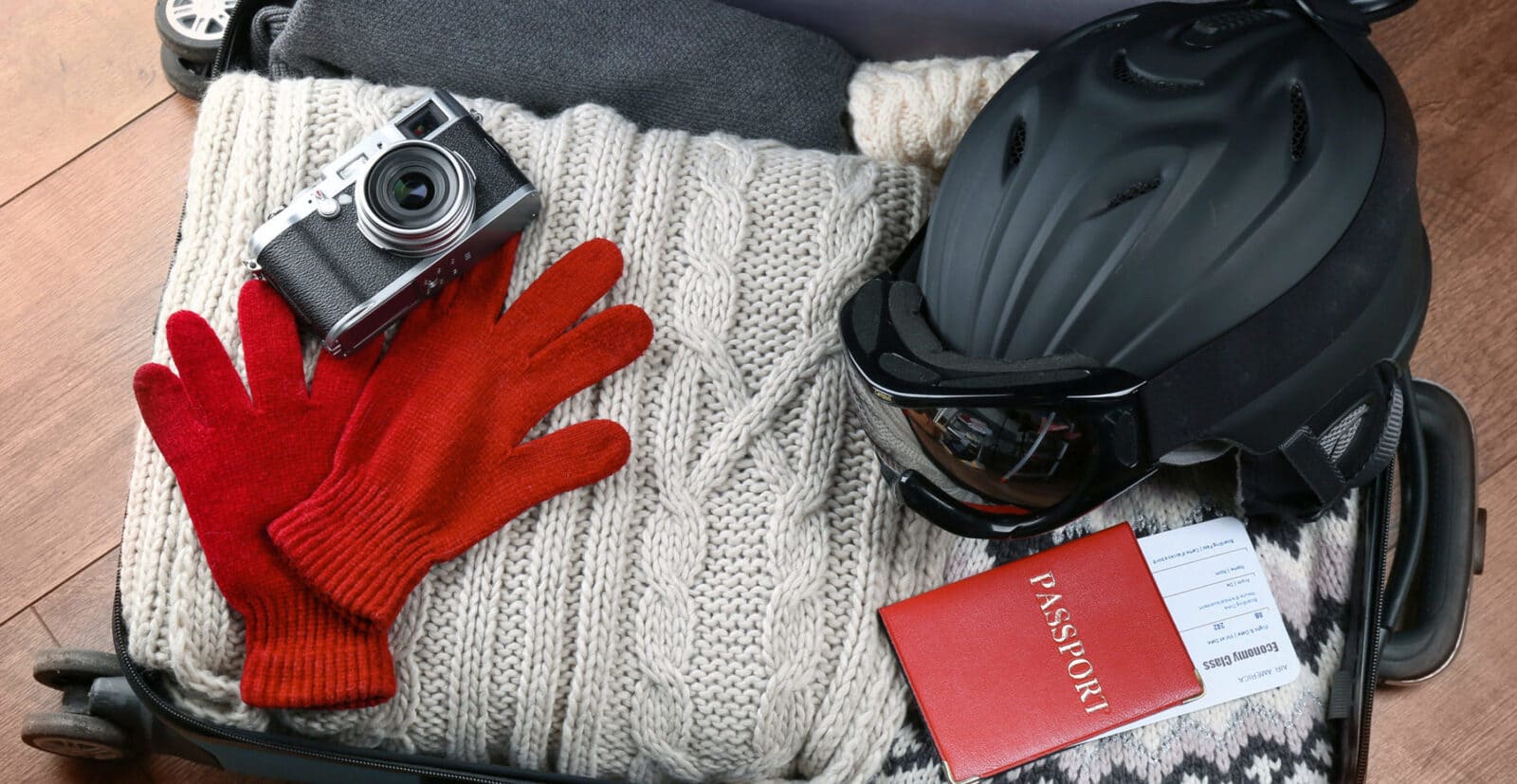
2. Check your passport

You’ll need at least 6 months left on your passport and it must have been issued in the last 10 years. To make sure your passport is valid please visit the Government’s passport checker.

3. Check your travel and health insurance gives you the right level of cover

If you have a European Health Insurance Card (EHIC) it is valid up to the expiry date displayed on the card.

There are limited details about what will replace EHIC but the UK government has said it will be issuing UK Global Health Insurance Card, which will most likely cover chronic or existing illnesses, maternity care and emergencies. Further details will follow.

The advice is to always take-out comprehensive travel insurance with appropriate healthcare cover, including existing medical conditions and any activities you plan to do such as skiing or other winter sports.

Ski-Lifts’ partner for travel insurance can be found here.

4. Mobile roaming charges may now apply

While the UK’s four main mobile operators have said they have no plans to reintroduce roaming fees, it’s a good idea to check with your provider before you head off. As of 1st Jan 2021, Brits in Europe are not guaranteed free mobile data roaming so you could be charged for calls, messages or using the internet or apps.

At the airport…

5. We love a queue but make sure you’re in the right one

You will no longer be able to use the EU passport lanes on arrival. You might also have to show a return ticket and that you have enough money for your stay.

6. Duty free is back!

Good news if you are travelling to the EU from the UK (expect Ireland) as you can now stock up on duty free shopping with tobacco and alcohol limits set to increase as well.

7. Know what food you can take with you

Meat and dairy products cannot be taken into EU countries so please check as recent news reports show they are checking. The exceptions are powdered baby milk, baby food or food required for medical reasons.

8. Driving in Europe

Take the hassle-free approach and book a transfer with Ski-Lifts to ensure that your holiday runs as smoothly as possible – be met at the airport and taken directly to your accommodation. Get an instant quote here.

If you are hiring a car, you’ll need to take your driving licence (you’ll need an international driving permit if yours is the old paper version or issued in Gibraltar, Channel Islands or the Isle of Man).

If you are taking your own vehicle, you’ll also need the logbook (V5C) and valid insurance documents – please contact your insurance company four to six weeks before travel to get a green card to prove you have insurance. They may charge you an admin fee for this. You’ll still need a GB sticker on the car.

Get an instant quote for your ski transfer today

Three great places to go skiing in Germany

There are several resorts in Germany for skiing. Of note are some great bunny mountains for those wanting to build their confidence, as well as the Kandahar run in Garmisch, which surprises everyone for how tricky it is for downhill ski fans.

Germany is a beginner and family skier’s secret bolthole, with many resorts just an hour away from Munich Airport and Munich Train Station, as well as many tiny towns and villages that no-one really knows about…

Q. Can you go skiing in Germany?

A. Yes! The Bavarian Alps have much to offer – and more so for the peaks and valleys that cross the border with Austrian ski resorts, where there are much bigger peaks to go skiing and ‘boarding in.


Book your ski transfer at Ski-Lifts

Where to go skiing in Germany


1. Garmisch, Germany

⛷ Need an airport transfer to Garmisch? Let Ski-Lifts take care of your ski transfers today!

Garmisch - Skiing in Germany

Garmisch – or Garmisch-Partenkirchen by its full name – is a very well-known location with 45km of pistes, where a skier can kick off their skiing holiday, before tacking the Kandahar for the week, or whizzing around the four big peaks: the Hausberg, the Kreuzeck, the Alpspitze and the Zugspitze (“Trek Top”), which is the highest mountain in Germany. It casually relaxes itself across the Austria-Germany border and descends into Ehrwald in Austria.

The whole Garmisch area has lots of little pockets of (interestingly named, and) beautiful places to pepper your trip with if you wish. There is the Linderhof, an ex-royal palace open to the public, a glacier Höllental (Wetterstein) – great for trying our climbing in the Alps, and Eibsee, which is quite possibly the most instagrammable lake in all of Germany.

⛷ Need an airport transfer to Garmisch? Let Ski-Lifts take care of your ski transfers today!


2. Oberjoch, Germany

⛷ Need a transfer to Oberjoch? Get a custom quote for your Germany ski transfer now.

Oberjoch - Skiing in Germany

Oberjoch Bad Hindelan is popular locally in a similar way that The Nevis Range is popular in Scotland, UK – the peaks are family-friendly, and the snow is good when travel costs are cheaper – in January and February. Of course, Oberjoch’s pistes aren’t as dizzying as they are elsewhere, but the slopes add up to a little range of 32km to choose from. While this is small, this number does makes Oberjoch much bigger compared to many tiny slopes dotted around Bavaria that literally centre around about 8 cabins and a few cafes (perfect if you’re on a serious hideaway holiday!). There is also a snow nursery for the smaller kids to meet and go sledding or learn skiing; and in the winter, Oberjoch welcomes a little troupe of horse-drawn carriages for couples wishing to live the actual Bavarian fairy tale.

⛷ Need a transfer to Oberjoch? Get a custom quote for your Germany ski transfer now.


3. Oberstdorf, Germany

⛷ Visitng Oberstdorf this season? Book your Munich Airport transfer today, with Ski-Lifts.

Oberstdorf - Skiing in Germany

Oberstdorf’s range technically crosses over in Austria – some skiers will tell you that Oberstdorf is Austrian because that’s where the bigger footprints of the mountains are… But if your resort or chalet is in Oberstdorf proper, you are actually still in Germany – albeit, the most southern tip of Bavaria.

It’s much bigger than most people imagine it to be, with 130km of pistes to choose from, including the more challenging red runs – the Fellhorn and Walmendingerhorn mountains. Off-piste, you can explore another untouched 70km of mountain and crag – a place that hikers and climbers tend to make more use of in the summer.

⛷ Visitng Oberstdorf this season? Book your Munich Airport transfer today, with Ski-Lifts.


4. Feldberg, Germany

⛷ Ski-Lifts has your ski transfers to Austria and Germany covered! Book now.

Feldberg - Skiing in Germany

Feldberg is the name of the mountain and the village, located at the “end” of the famous Black Forest. It is sizeable in terms of the kinds of skiing areas that exist in Germany – there are 60km of slopes across the Feldberg and Seebuck mountains here (not including any off-piste shenanigans), which together make Feldberg a third bigger than Garmisch’s range in total, just for on-piste.

Feldberg has 36 slopes and 28 lifts – again, not massively known internationally, but a new year must-do in Germany, with lots of city folk rushing in during the Christmas and school holidays here. Feldberg is also the spiritual home of skiing in Germany – at least in the sense that in 1892, Germany’s first ever ski club was established on Feldberg mountain; and the first ski-in ski-out lodge in the country.

⛷ Ski-Lifts has your ski transfers to Austria and Germany covered! Book now.


Q. Which areas in Germany are popular for skiing?

A. Garmisch is probably the most famous ski resort in Germany, home of the country’s tallest mountains and most challenging downhill runs. Oberjoch and Oberstdorf are also well-known as Bavarian Alps wonderlands; the latter crossing over into Austria. Oberstdorf offers an impressive 80 miles of piste to explore, and a World-Cup ski track.

Book your ski transfers in just a couple of minutes - airport transfers offered by Ski Lifts