How to Get to Morzine | Transfers, Airports & Travel Guide

How to Get to Morzine

Morzine is one of the easiest major French ski resorts to reach, which is a big reason it remains so popular for families, weekend skiers and shorter breaks from the UK.
Geneva to Morzine transfer is usually the simplest option thanks to the short airport-to-resort journey, but Morzine can also be reached via other airports, by train to nearby stations, by car, or by combining public transport with a final road transfer.

This guide compares the main ways to get to Morzine, helping you weigh up transfer times, convenience and which route is likely to suit your trip best.

How to Get to Morzine

Getting from Geneva to Morzine

Geneva is the closest and most practical airport for Morzine, which is why it is the main arrival point for most visitors to the resort. In normal conditions, the transfer usually takes around 1 hour 15 minutes to 1 hour 30 minutes, making it one of the quickest airport journeys to any major French ski resort.

That short journey is a major part of Morzine’s appeal. For families with younger children, groups arriving on different flights, or anyone planning a shorter ski trip, avoiding a long onward transfer can make the whole holiday feel easier from the moment you land.

What affects the Morzine transfer price?

  • Date & season: Christmas, New Year and February half-term are usually the busiest periods and often the most expensive.
  • Day of week: Saturday changeover days tend to be busier than mid-week travel.
  • Group size & vehicle type: scheduled, shared, private and luxury transfers are priced differently.
  • Booking lead time: booking early usually gives you more choice and better-value fares.

Compare transfer options from Geneva to Morzine

Transfer Type Image Price Example Passengers Travel Time* Drop-Off Baggage & Ski Gear Child Seats Best For
Scheduled Scheduled transfer to Morzine From £27.28 / person 1+ 1 hr 30 mins* Shared drop-off route ✔ Included ✔ Available Lowest-cost option
Shared Shared transfer to Morzine From £31.19 / person 1+ 1 hr 30 mins* Morzine accommodation ✔ Included ✔ Included Budget friendly
Private Private transfer to Morzine From £269.00 / vehicle 1–8+ 1 hr 15–30 mins Morzine accommodation ✔ Included ✔ Included Families & groups wanting no wait
Luxury Luxury transfer to Morzine From £360.64 / vehicle 1–8 1 hr 15–30 mins Morzine accommodation ✔ Included ✔ Included Premium comfort
Eco-Friendly 🌱 Eco-friendly transfer to Morzine From £323.00 / vehicle 1–8 1 hr 15–30 mins Morzine accommodation ✔ Included ✔ Included Lower-impact travel

Examples current as of April 2026, one-way travel. Live prices vary by date, group size and availability. *Travel times are subject to weather, traffic and winter road conditions. Shared services may include a longer airport wait and additional stops en route..

Other airports for Morzine

Although Geneva is usually the best option, Morzine can also be reached from Chambéry, Grenoble and Lyon. These routes are longer and generally less convenient, but they can still be worth considering if flight times are better or if Geneva fares are unusually high on your travel dates.

Unlike resorts deeper into the Tarentaise, Morzine sits relatively close to the Swiss border, so airport choice affects overall convenience more than access itself. For most travellers, the shortest route still tends to be the best all-round route.

Airport Approx. Distance Typical Transfer Time* Example Private Price Best For
Geneva 80 km 1 hr 15–30 mins From £269.00 / vehicle Shortest overall journey for most travellers
Chambéry 130 km 1 hr 45 mins From £335.78 / vehicle Alternative French airport option
Grenoble 188 km 2 hrs 30 mins From £425.40 / vehicle Useful on selected winter flight routes
Lyon 207 km 2 hrs 30 mins From £489.93 / vehicle Year-round flight flexibility
Cluses Station 30 km 40 mins From £191.45 / vehicle Best option for rail travellers

How long does it take to get to Morzine?

Transfer times to Morzine depend on where you start and traffic levels on the approach into the valley. Geneva is the quickest and most common route at around 1 hour 15 minutes to 1 hour 30 minutes. Chambéry usually takes around 1 hour 45 minutes, while Lyon and Grenoble are both typically around 2 hours 30 minutes.

On peak Saturdays, school holiday weeks or during snowfall, allow extra time for traffic on the A40 and the final climb into resort. If you’re travelling back to the airport, especially for early or mid-afternoon flights, it’s sensible to build in a buffer.

Getting to Morzine by train

There is no railway station in Morzine itself, so train journeys need to be completed with a final road transfer. Cluses is usually the most practical nearby station, and from there it takes around 40 minutes to reach resort in normal conditions.

For travellers coming from elsewhere in France or combining rail with air travel, this can be a workable option, but it is still less direct than flying into Geneva and continuing by transfer. Morzine is easy to reach, but the final leg is always by road.

Getting to Morzine by car

Driving to Morzine gives you flexibility and can work well for longer stays or self-catering trips, but winter preparation is still essential. Between 1 November and 31 March, French mountain driving rules may require suitable winter equipment, including winter tyres or snow chains depending on conditions.

  • Expect toll roads and fuel costs if driving from Geneva, the UK or elsewhere in France.
  • Traffic can build up on Saturdays during the ski season, especially on the approach from Geneva.
  • The final climb into Morzine is easier than some higher alpine resorts, but snow can still affect journey times.

For many visitors, especially after a flight, a pre-booked transfer is simpler than collecting a hire car and driving in winter conditions.

Bus to Morzine

Public transport to Morzine is possible, but it is not always the most straightforward option, especially with ski luggage. Depending on your starting point, you may need to combine coach, train and local bus services before reaching resort.

Because Morzine is so close to Geneva, many travellers find that a direct transfer is worth the extra cost compared with navigating multiple connections. The time saved is often more valuable here than at resorts where public transport delivers a clearer price advantage.

Taxi to Morzine

A taxi from Geneva to Morzine gives you a direct and convenient journey, especially if you are arriving late or want to leave the airport immediately. The main downside is cost, as taxis are usually more expensive than pre-booked transfers for the same route.

Since Morzine is already a relatively short transfer, many travellers prefer to book ahead and secure a known price rather than rely on airport taxi availability during busy winter weekends.

Why choose a pre-booked transfer to Morzine?

  • Direct to your accommodation: Morzine is a road-access resort, so most transfers can drop you close to where you’re staying.
  • Skis and snowboards included: no extra charge when added in advance.
  • Child seats included free: easier family travel when pre-booked.
  • Shared, scheduled and private options: choose the right balance of budget and convenience.

Morzine transfer timing guide

Timing makes a big difference when planning your journey. Availability, traffic and pricing can vary across the winter season.

Peak Season

Mid-December – Late March

  • Christmas, New Year & February half-term
  • Roads and transfers are busiest
  • Book early for best availability

Shoulder Season

Early December & Late March

  • Often quieter roads
  • Good mix of value and snow conditions

Summer & Off-Peak

Spring, summer & autumn

  • Private transfers remain available year-round
  • Morzine is also popular for mountain biking and hiking breaks

Weekends vs. weekdays

  • Mid-week transfers can be less busy than Saturday changeover days.
  • Flexible travel dates may help you find better pricing and smoother transfer times.

Book Early & Travel Smoothly

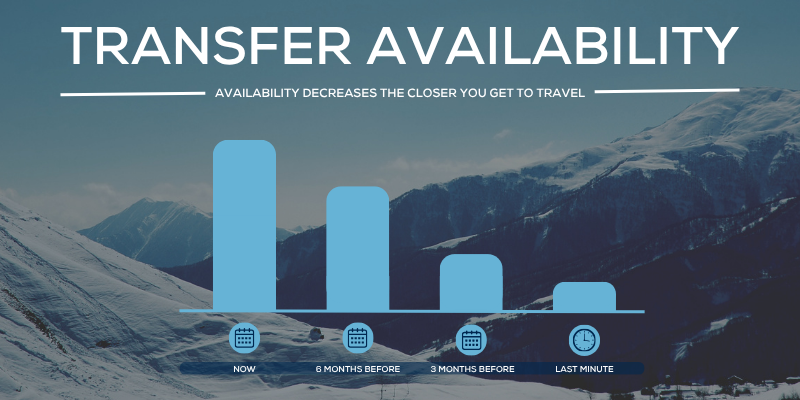
  • Peak winter weeks fill quickly, especially for private and shared transfers from Geneva.
  • Early booking gives you the widest choice of transfer types and schedules.
  • Shared or scheduled transfers are usually the most budget-friendly option for solo travellers and couples.

Book your airport transfer from Geneva to Morzine

Arranging your airport transfer from Geneva to Morzine with Ski-Lifts means less time dealing with connections and more time focusing on your trip. With a range of Morzine transfers available to suit different travel styles and group sizes.

Private transfers are available year-round, with options to suit different group sizes and travel styles. During the winter season, shared and scheduled transfers offer great-value ways to reach Morzine efficiently from Geneva Airport.

Book your Geneva to Morzine transfer with Ski-Lifts and arrive ready to make the most of everything the resort and the wider Portes du Soleil have to offer.

Morzine Instant Quote

Morzine Transfer Cost Guide – Frequently Asked Questions

What is the cheapest way to get to Morzine?

Public transport can sometimes be the cheapest option overall, but it usually involves connections and a longer journey time. For many travellers, shared or scheduled transfers offer the best balance of price, convenience and direct travel to resort.

How long is the transfer to Morzine?

Transfer times depend on your starting point and road conditions. As a guide: Geneva to Morzine is around 1 hour 15 minutes to 1 hour 30 minutes, Chambéry around 1 hour 45 minutes, Lyon around 2 hours 30 minutes, Grenoble around 2 hours 30 minutes, and Cluses station around 40 minutes.

Which is the closest train station to Morzine?

The closest practical train station to Morzine is Cluses, around 30 km from the resort. From there, the journey to Morzine is completed by road and usually takes about 40 minutes.

Should I fly to Geneva or Chambéry for Morzine?

For most travellers, Geneva is the better all-round choice because it is closer, has wider flight choice and usually offers the simplest transfer to resort. Chambéry can still work well if flight timings line up and fares are better on your travel dates.

Is Lyon cheaper overall for Morzine?

Lyon can sometimes offer cheaper flights, particularly outside peak ski weeks, but the longer transfer can offset any savings. It is usually best to compare the total trip cost, including both flights and transfers.

Best airport for Morzine?

Geneva is usually the best airport for Morzine because it combines the shortest, simplest transfer with a wide choice of international flights. It is the nearest and most practical option for most travellers.

Is Morzine easy to reach without a car?

Yes. Morzine is one of the easier French Alpine resorts to reach without a car, especially from Geneva Airport. A pre-booked transfer is usually the most straightforward option, as there is no direct train into the resort itself.

How to Get to Val Thorens | Transfers, Airports & Travel Guide

How to Get to Val Thorens

There are several ways to reach Val Thorens, and the best option for you will depend on your budget, schedule, and where you’re travelling from.
Geneva to Val Thorens transfer is often the fastest and most convenient choice, taking you directly to your accommodation so you can head straight for the slopes, but you can also arrive via other airports, by train, by car, or using public transport, and this guide walks you through each option.

Whether you’re travelling solo, with family, or as part of a larger group, you’ll find clear examples to help you plan both your journey and your budget with confidence.

How to Get to Val Thorens

Getting from Geneva to Val Thorens

Geneva is one of the most popular and convenient airports for reaching Val Thorens, with a typical transfer time of around 2 hours 45 minutes in normal winter conditions, depending on traffic, route, and weather. Transfers are operated by experienced, professional drivers who prioritise safe and smooth mountain driving, so you can relax, enjoy the scenery, catch up on sleep, or plan your first day on the slopes along the way.

On arrival, you’ll be met in the arrivals area and guided to your vehicle, helping you get on the road as quickly and efficiently as possible. You’ll be dropped close to your accommodation in Val Thorens where road access allows, and return transfers are arranged just as smoothly. Shared transfers run throughout the main winter season, while private options are available year-round for added flexibility.

What affects the Val Thorens transfer price?

  • Date & season: peak weeks such as Christmas, New Year and February half-term are usually busier and more expensive.
  • Day of week: mid-week (Mon–Fri) is often cheaper than weekends.
  • Group size & vehicle types: private, shared, coach and luxury options are priced differently.
  • Timing: booking early usually gives you more choice and lower rates.

Compare transfer options from Geneva to Val Thorens

Transfer Type Image Price Example Passengers Travel Time* Drop-Off Baggage & Ski Gear Child Seats Best For
Shared Shared transfer to Val Thorens From £89.33 / person 1+ 2 hrs 45 mins* Val Thorens accommodation ✔ Included ✔ Included Budget friendly
Private Private transfer to Val Thorens From £283.49 / vehicle 1–8+ 2 hrs 45 mins Val Thorens accommodation ✔ Included ✔ Included Families & groups wanting no wait
Luxury Luxury transfer to Val Thorens From £720.62 / vehicle 1–8 2 hrs 45 mins Val Thorens accommodation ✔ Included ✔ Included Premium comfort
Coach Coach transfer to Val Thorens From £1408.26 / vehicle Up to 50 2 hrs 45 mins Val Thorens accommodation ✔ Included Not required Large groups
Eco-Friendly 🌱 Eco-friendly transfer to Val Thorens From £1426.96 / vehicle 1–8 2 hrs 45 mins Val Thorens accommodation ✔ Included ✔ Included Sustainable option

Examples current as of April 2026, one-way travel. Live prices vary by date, group size and availability. *Travel times are subject to weather, traffic and winter road conditions. Shared services may include a longer airport wait and additional stops en route.

Other airports for Val Thorens

While Geneva is the most popular choice for many travellers, Val Thorens can also be reached from Chambéry, Lyon and Grenoble. Chambéry is the closest airport by road, while Lyon and Grenoble can work well depending on flight availability, timings and total trip cost.

Airport Approx. Distance Typical Transfer Time* Example Private Price Best For
Geneva 202 km 2 hrs 45 mins From £283.49 / vehicle Frequent flights and strong all-round choice
Chambéry 121 km 1 hr 30 mins From £236.60 / vehicle Shortest transfer time
Lyon 198 km 2 hrs 30 mins From £310.69 / vehicle Useful year-round flight choice
Grenoble 194 km 2 hrs 30 mins From £343.53 / vehicle Alternative French airport option
Moûtiers Station 40 km 45 mins From £180.09 / vehicle Best option for rail travellers

If you’re comparing airports, Chambéry often has the shortest transfer, but Geneva remains a strong all-round option thanks to wider flight choice and regular transfer availability. Lyon and Grenoble can also be worth considering if flight schedules or fares suit your trip better.

How long does it take to get to Val Thorens?

Transfer times to Val Thorens depend on where you start and the road conditions on the final mountain ascent. Geneva usually takes around 2 hours 45 minutes, Chambéry around 1 hour 30 minutes, while Lyon and Grenoble are both typically around 2 hours 30 minutes.

On peak Saturdays, school holiday weeks, or during snowfall, allow extra time for traffic in the Tarentaise valley and possible chain controls on the climb above Moûtiers. If you’re travelling back to the airport, especially for afternoon flights, it’s sensible to build in a buffer.

Getting to Val Thorens by train

The closest train station to Val Thorens is Moûtiers (Brides-les-Bains), located around 40 km from the resort. This station is well connected by TGV services from Paris and by Eurostar ski train routes from London during the winter season.

From Moûtiers, the final stretch to Val Thorens is by road. A private or shared transfer is the easiest way to complete the journey, taking around 45 minutes in normal conditions.

Getting to Val Thorens by car

Driving to Val Thorens gives you flexibility, but winter preparation is essential. Between 1 November and 31 March, French mountain driving laws require suitable winter equipment, which may include winter tyres and snow chains.

  • Expect toll roads and fuel costs if driving from the UK or other parts of France.
  • Traffic can be heavy on Saturdays during the ski season.
  • The final section from Moûtiers climbs steeply, so snow conditions can affect journey times.

For many travellers, a transfer is easier than driving yourself, particularly after a flight or long-distance journey.

Bus to Val Thorens

Public transport to Val Thorens usually involves a train or bus to Moûtiers, followed by a regional bus up to the resort. From Geneva, this journey typically takes between 4 and 6 hours, depending on schedules and connections, and usually costs from €40–€90 one way per person.

While it can be the cheapest option, it is also the least direct. Weekend queues, timetable changes, and carrying ski luggage between connections can make it less convenient than a direct transfer.

Taxi to Val Thorens

Taking a taxi from Geneva to Val Thorens offers a direct journey, but it is usually one of the most expensive ways to travel. It can be useful if you need immediate transport on arrival, but fares are typically much higher than a pre-booked transfer for a route of this length.

Public transport is different, usually requiring travel to Moûtiers first and then continuing by road up to the resort. That means a taxi can be direct but expensive, while trains and buses can be cheaper but involve more waiting, more connections and less convenience with ski luggage.

Why choose a pre-booked transfer to Val Thorens?

  • Direct to your accommodation: no extra bus changes or station waits.
  • Skis and snowboards included: no extra charge when added in advance.
  • Child seats included free: stress-free for families when pre-booked.
  • Shared and private options: choose the right balance of value and convenience.

Val Thorens transfer timing guide

Timing makes a big difference when planning your journey. Availability, traffic and pricing can vary across the winter season.

Peak Season

Mid-December – Late March

  • Christmas, New Year & Feb half-term
  • Roads and transfers are busiest
  • Book early for best availability

Shoulder Season

Late Nov & Late March

  • Often quieter roads
  • Good mix of value and snow conditions

Off-Peak Season

Early December & April

  • Best value for many travellers
  • Val Thorens’ altitude means reliable snow late into the season

Weekends vs. weekdays

  • Mid-week transfers can be less busy than Saturday changeover days.
  • Flexible travel dates may help you find better pricing and smoother transfer times.

Book Early & Travel Smoothly

  • Peak winter weeks sell out quickly, especially for private transfers.
  • Early booking gives you the widest choice of vehicle types and schedules.
  • Shared transfers are usually the most budget-friendly option for solo travellers and couples.

Book your airport transfer from Geneva to Val Thorens

Arranging your airport transfer from Geneva to Val Thorens with Ski-Lifts means less time worrying about logistics and more time focusing on your trip.

Private transfers are available year-round, with a choice of vehicle options to suit your group and travel style. During the winter season, shared transfers provide a great-value option for reaching Val Thorens comfortably and efficiently from Geneva Airport.

Book your Geneva to Val Thorens transfer with Ski-Lifts today and arrive relaxed, ready to make the most of everything the resort has to offer from the moment you get there.

Val Thorens Instant Quote

Val Thorens Transfer Cost Guide – Frequently Asked Questions

What is the cheapest way to get to Val Thorens?

Public transport can sometimes be the cheapest option overall, but it usually involves connections via Moûtiers and a longer journey time. For many travellers, shared transfers offer the best balance of price, convenience and direct travel to resort.

How long is the transfer to Val Thorens?

Transfer times depend on your starting point and road conditions. As a guide: Geneva to Val Thorens is around 2 hours 45 minutes, Chambéry around 1 hour 30 minutes, Lyon around 2 hours 30 minutes, Grenoble around 2 hours 30 minutes, and Moûtiers station around 45 minutes. Private transfers are usually more direct, while shared services may take longer due to additional stops.

Which is the closest train station to Val Thorens?

The closest train station to Val Thorens is Moûtiers (Brides-les-Bains), around 40 km from the resort. From there, the journey to Val Thorens is completed by road and usually takes about 45 minutes.

Should I fly to Geneva or Chambéry?

For most travellers, Geneva is the more flexible choice due to better flight schedules and availability. Chambéry can be a good option if flight times align and you want a shorter transfer, but services are more limited and often concentrated around weekends.

Is Lyon cheaper overall?

Lyon can sometimes offer cheaper flights, particularly outside peak ski weeks, but the longer transfer of around 2 hours 30 minutes can offset any savings. It is usually best to compare the total journey cost, including both flights and transfers.

Best airport for Val Thorens?

Geneva is the most popular and practical airport for Val Thorens, offering the widest choice of international flights and regular transfer services. Chambéry is closer, but has more limited flight availability and is highly seasonal.

Is Chambéry better than Geneva?

Chambéry is closer to Val Thorens, with transfer times of around 1 hour 30 minutes, compared to approximately 2 hours 45 minutes from Geneva. However, Geneva is often more convenient overall due to more frequent flights, better availability and more consistent transfer options.

Winter 2026 Snow Update: Mid Season Ski Deals & Easter Travel | Ski-Lifts

Winter Is Far From Over: Mid‑Season Ski Deals & Easter Travel

Half term might be here, but the 2025/26 winter is still going strong. Fresh snow is lining up for the Alps, forecasts look promising well into spring, and there are still plenty of chances to squeeze in a great‑value ski trip before the lifts stop turning.

You can use Ski-Lifts to reach ski resorts across France, Switzerland, Austria, Italy, Andorra, Slovenia, Japan, Canada and the USA, with transfers from key airports and train stations straight to resort.

Fresh snow and winter ski conditions in the Alps

Fresh Snow & The Outlook for Late Winter

The latest Ski-Lifts Snow Report & 7‑Day Forecast shows a more wintry pattern returning to the Alps, with several rounds of new snow favouring the western and south‑western ranges. A solid mid‑season base is already in place at altitude, so new snowfall will mainly act to freshen pistes and improve coverage on key links.

Resorts such as Val Thorens, Tignes, Val d’Isère, Les Arcs, La Plagne and Les Deux Alpes all show very strong 7‑day snowfall signals, with accumulations of roughly 70–120 cm expected on the upper mountain. Chamonix, Avoriaz, Verbier, Zermatt and Saas‑Fee also have healthy forecasts, keeping conditions wintery well beyond half term.

Fresh snow across high-altitude ski resorts

Why Post‑Half‑Term Trips Work So Well

Once the half‑term rush passes, the picture changes: slopes are quieter, availability improves, and travelling outside Saturdays can unlock much better value. Mid‑week breaks (Monday–Friday or Sunday–Thursday) in particular can deliver sizeable savings across flights, accommodation and transfers.

  • Lower overall costs: Weekday flights and off‑peak hotel or apartment rates, combined with cheaper mid‑week transfers, can reduce the total cost of a trip by up to around 50% compared with peak Saturday travel on popular routes.
  • Calmer travel days: Airports, motorway approaches and resort arrivals are noticeably quieter when you avoid the classic Saturday changeover.
  • More time on the mountain: With more flexibility on flight times mid‑week, it is easier to land early, ski that afternoon, and depart late after a final morning on the slopes.

If you prefer a full week, consider travelling Sunday–Sunday or mid‑week rather than Saturday–Saturday. You still get seven days in resort, but with a quicker journey and often a better deal and you can stack extra savings by checking the latest promotions on our ski transfer deals and offers page before you book.

Mid-week ski transfers on quieter winter roads

Where Is Looking Best Right Now?

Rather than a simple “best resorts” list, this is about where the current and upcoming snow favours – and the kind of trip you want between now and Easter. The live snow tables on the
snow report are the place to check just before you book.

Fresh‑Snow Favourites in the Western Alps

  • Val Thorens & Les 3 Vallées (France): Currently showing very strong high‑altitude confidence, with 75–90 cm of new snow expected and already excellent piste skiing between snow.
  • Tignes & Val d’Isère (France): Glacier‑backed and high, with 70–90 cm of fresh snow in the 7‑day outlook and great preservation on upper, shaded runs.
  • Les Arcs & La Plagne (France): Paradiski is forecast 70–95 cm at altitude, with the best conditions higher up and on north‑facing sectors – ideal for mixed‑ability groups.
  • Les Deux Alpes & Chamonix (France): Big late‑winter snow signals at altitude, particularly on glaciers and upper sectors, keeping both resorts attractive for those chasing a more “all‑mountain” feel.

High & Reliable: Austria, Switzerland & Italy

  • Sölden & Obergurgl (Austria): Light to moderate top‑ups (10–20 cm) help keep pistes crisp, while glaciers and altitude provide long‑season security into late April and early May.
  • St. Anton & the Arlberg (Austria): Fresh snow in the 25–40 cm range is forecast for higher sectors, topping up already strong coverage across the network.
  • Verbier, Zermatt & Saas‑Fee (Switzerland): With terrain reaching well above 3,000 m and 30–75 cm of snow on the way, these are classic choices for late‑season trips.
  • Cervinia & Courmayeur (Italy): High‑altitude Cervinia shows 55–75 cm in the outlook, while Courmayeur could see up to 90–120 cm at altitude, making the Mont Blanc region a strong bet in the coming weeks.

High-altitude ski resorts for late winter

Slovenia & Other Quiet Corners

If you are keen to avoid crowds entirely, Slovenia and neighbouring regions are worth a look. Resorts such as Kranjska Gora, Bled and Bohinj often see solid mid‑winter snowfall, with historical averages in February around 40–100 cm from village to summit, supported by good snowmaking.

They tend to be quieter than bigger Alpine hubs, which makes them appealing for a second or third trip when you want relaxed pistes, characterful villages and a lower overall spend.

Quiet slopes in Slovenia during late winter

Looking Further Afield: Japan, Canada & the USA

For a big‑trip finale, mid‑winter into early spring is prime time in many long‑haul destinations. Seasonal outlooks highlight strong snow patterns in parts of Canada and the western US this year, while Japan remains one of the most consistently deep regions on the planet.

  • Japan: Resorts in Hokkaido and Honshu are renowned for frequent snow cycles and tree‑lined powder runs; February and March are typically peak months.
  • Canada: Western Canada (including Banff, Lake Louise, Whistler and interior BC areas) is deep into its prime season, with regular top‑ups and strong base depths.
  • USA: The latest updates for North America show improving mid‑winter conditions across the Rockies and Pacific Northwest, with further snow likely into March.

Wherever you are thinking of heading, checking both regional reports and the Ski-Lifts snow report before you book is the best way to align your dates with the next big snowfall.

Global ski destinations including Japan, Canada and USA

Easter Is Early: High, Snow‑Sure & Family Friendly

Easter Sunday falls on 5 April in 2026, which counts as an early Easter. That is already driving demand for high, snow‑reliable resorts that stay open well into April and work brilliantly for families.

  • Tignes & Val d’Isère: Typically open until early May, with glacier and high‑altitude skiing keeping conditions reliable through the Easter holidays.
  • Val Thorens & 3 Vallées: Europe’s highest major resort, often offering excellent snow and family‑focused activities right through April.
  • La Plagne & Les Arcs: Plenty of slopes above 2,000 m and a wide choice of family‑friendly villages; Paradiski’s upper sectors usually hold up very well into spring.
  • Avoriaz: High, snow‑sure and car‑free, with a strong record for April skiing and lots of family‑orientated accommodation and activities.
  • Saas‑Fee & Zermatt: Glacial terrain up to 3,500 m and some of the best late‑season snow records in the Alps, making them standout choices for Easter week.

If you are tied to school holidays, the basic recipe is to choose altitude, glacier or north‑facing terrain, then combine that with a Sunday or mid‑week arrival to dodge the busiest travel days.

Families skiing at Easter in a high-altitude resort

How to Make the Most of the Rest of Winter

To get the best out of the late season:

  • Use the Ski-Lifts snow report & 7‑day forecast to time your trip around incoming snow and focus on resorts with the strongest high‑altitude outlook.
  • Travel Sunday or mid‑week rather than Saturday to lower costs and avoid the busiest travel days.
  • For Easter, prioritise resorts with plenty of skiing above 2,000 m, glacier access or mainly north‑facing slopes so the snow lasts the whole holiday.
  • Book early for key late‑season dates, especially Easter as demand for high, snow‑sure resorts is already increasing.

Winter 2025/26 still has a lot to give: new snow in the forecast, quieter slopes after half term and an early Easter that lines up perfectly with high‑altitude spring skiing. If you have been waiting to see how the season shapes up, now is the moment to plan one more adventure before the lifts finally stop spinning.

Great Places to Ski in February: Mid‑Week Savings

Great Places to Ski in February: Mid‑Week Savings

February is one of the best months to ski, and if you travel mid‑week instead of on busy Saturday changeover days, you can save money, dodge queues and squeeze more skiing into a short break. It is also the perfect time to discover some of the best February ski resorts and plan flexible ski trips in February that work around your schedule, not everyone else’s.

best february ski resorts

Why Go Mid‑Week in February?

Saturday is still the classic ski changeover day and this means the busiest airports, slowest roads and often the highest prices for flights and transfers. By shifting your trip to Monday–Friday or Sunday–Thursday, you immediately sidestep the worst of the crowds.

  • Cheaper transfers: Mid‑week transfers (Monday–Friday) can be priced up to around 40% less than weekends on some routes.
  • Better‑value flights: Weekday flights are often significantly cheaper than peak Saturday departures, especially around half‑term.
  • Quieter travel days: Airports, roads and resort arrivals are noticeably calmer away from the main changeover rush.

Combine those savings with February’s deep snow and longer days, and a 3–4 night mid‑week break can feel like a full holiday, without peak‑week stress. For extra value on ski trips in February, keep an eye on our latest promotions on the Ski-Lifts deals and offers page, where you’ll find seasonal discounts and partner offers tailored to short breaks.

High, Snow‑Sure Resorts for Mid‑Week Breaks

When you only have a few days, you want snow you can rely on. These higher, snow‑sure destinations are among the best February ski resorts for mid‑week trips, with plenty of terrain, strong conditions and good transfer options.

Great places to ski in February

Val Thorens, France – Big mileage, better value mid‑week

Part of the 3 Valleys and one of the highest major resorts in Europe, Val Thorens is a February classic with a huge, snow‑sure ski area. Travel from Geneva, Lyon or Grenoble is busiest on Saturdays, but mid‑week transfers are typically cheaper and face less traffic heading up from Moûtiers.

Aim for a Monday or Tuesday arrival, ski through to Thursday or Friday, and you avoid the big weekend queues while still ticking off serious mileage across the 3 Valleys. For many skiers planning ski trips in February, Val Thorens is near the top of the list.

Tignes & Val d’Isère, France – Glacier security without Saturday queues

Tignes–Val d’Isère combines glacier skiing, high lifts and extensive pistes that hold their snow superbly into February. Weekday transfers from Geneva or Lyon usually offer better value than peak Saturday travel days, and roads are noticeably quieter outside the main changeovers.

If you can fly out mid‑week, you get all the benefits of a flagship ski area with steep runs, big vertical and great off‑piste, all without spending your first and last days in traffic. It is one of the great places to ski in February if you want serious terrain and flexible dates.

Cervinia, Italy – High‑altitude cruising, flexible dates

Linked with Zermatt, Cervinia’s altitude and long, open pistes make it a strong bet for February. Turin and Milan airports see heavy Saturday flows, but mid‑week you’ll often find cheaper flights and smoother journeys up to the resort.

For a mid‑week break, that means more time cruising the long runs from Plateau Rosa and fewer hours queuing at check‑in or inching up the valley, ideal if you are stringing together several short ski trips in February.

Short‑Transfer Resorts: Maximise Mid‑Week Ski Time

Pick a resort under two hours from the airport and an early‑week flight, and you can be on the mountain the same afternoon you land. These destinations are ideal when every hour counts and are some of the great places to ski in February if you are focused on short breaks.

best february ski resorts in austria

Morzine, Avoriaz and Les Gets, France – 90 minutes from Geneva

Morzine, Avoriaz and Les Gets in the Portes du Soleil are around 1 hour 30 minutes from Geneva under normal conditions. Mid‑week, roads are quieter, and both flights and transfers can be significantly cheaper than Saturday peak.

Fly out on a Monday morning, grab a mid‑week transfer, and you can be settling into your accommodation by lunchtime and skiing that afternoon, without battling weekend queues at the airport.

Chamonix, France – Big mountains, quick escape

Chamonix is one of the quickest major resorts to reach from Geneva, with typical transfer times of about an hour when traffic is light. That makes it perfect for spontaneous mid‑week missions when the snow and weather line up.

Avoiding Saturday means less time in airport queues and more time exploring the Vallée Blanche, Grand Montets or the tree‑lined areas on bad‑weather days.

La Clusaz, Flaine & other quick‑access French resorts

La Clusaz, Flaine and other short‑transfer French resorts come into their own for mid‑week escapes, especially if you can grab a late afternoon or evening flight out and ski first thing the next morning.

With lighter weekday traffic, transfer times are more predictable, and you have a much better chance of stepping off the plane and straight into your transfer, rather than queuing behind multiple Saturday coach departures.

Mid‑Week to Beat the Half‑Term Rush

If your February plans overlap with school holidays, mid‑week travel can soften the impact: quieter airports, less congested roads and more flexibility on flight times. Picking the best February ski resorts in slightly quieter valleys can make an even bigger difference.

Obergurgl, Austria – Calm, snow‑sure and flexible

Obergurgl is known for its relaxed vibe and reliable snow, and it works especially well if you can arrive and depart mid‑week. You skip the busiest transfer days into the Ötztal and enjoy quieter pistes mid‑week, even when weekends are packed.

Other “quiet” choices

Resorts slightly away from the mainstream, including smaller Austrian villages and lesser‑known Swiss areas, often see a big difference between weekend and weekday volume. Travel Monday–Friday and you’re more likely to enjoy empty check‑in desks, shorter lift queues and less‑crowded mountain restaurants.

How to Make Your Mid‑Week Break Go Further

A few simple tweaks can turn a mid‑week February trip into maximum slope time and minimum hassle.

  • Travel Monday–Friday or Sunday–Thursday: Avoid Saturday changeovers altogether to benefit from lower prices and quieter travel days.
  • Target early/late flights: Land early, ski that afternoon; depart late and ski on your final morning, especially if you choose a short‑transfer resort.
  • Book mid‑week transfers: Look for weekday services, which can be priced up to around 40% less than weekend transfers and offer calmer roads.
  • Stay close to the lifts: Ski‑in/ski‑out or central accommodation saves valuable time on short trips.
  • Check current deals: Before you book, visit our ski transfer deals and offers page for the latest promo codes and route‑specific discounts on mid‑week journeys.

Plan smart, aim for great places to ski in February, choose from the best February ski resorts and travel mid‑week, and the month becomes the ideal time for quick hits to the mountains with deep snow, quieter travel and better‑value transfers, all wrapped into ski trips in February that feel anything but rushed.

Austria: The Top Ski Destination for 2025/26 | Ski-Lifts

Austria: The Top Ski Destination for 2025/26

Austria’s snowy peaks, modern ski infrastructure, and exceptional value make it the standout choice for winter holidays in 2025/26. More travellers are choosing Austria over France thanks to its unbeatable combination of world-class resorts, traditional charm, shorter transfers, and more affordable skiing. Whether you’re a first-time skier, a family, or a seasoned expert, Austria delivers the perfect ski experience for every group size and budget.

Why Choose Austria Instead of France?

While France is known for its enormous ski domains, Austria has become the preferred choice for skiers seeking value, efficiency, charm, and world-class snow reliability. Austria stands out thanks to:

  • Shorter, easier airport transfers from Innsbruck, Salzburg, Munich, Zurich and Vienna.
  • Lower prices for lift passes, dining, ski schools, and accommodation.
  • Modern, fast ski lifts with heated chairs, high-capacity gondolas, and minimal queues.
  • Snow-sure slopes, with industry-leading snowmaking across resorts.
  • Traditional Alpine villages with a warm, welcoming atmosphere.
  • Legendary après-ski and a focus on hospitality you won’t always find in high French stations.

Austria combines efficiency with charm — the perfect blend of convenience and authenticity.

Austria vs France: The Key Differences

What Skiers Love About… Austria France
Atmosphere & Villages Charming, traditional Alpine towns with warm hospitality. Modern resort hubs with plenty of ski-in/ski-out options.
Ski Terrain Varied pistes, fantastic grooming, and excellent for cruisy mileage. Huge linked ski areas like the 3 Vallées, Espace Killy & Paradiski.
Lift Systems Known for very modern lifts, heated chairs & continuous investment. Fast, extensive networks covering some of Europe’s largest ski areas.
Snow Reliability Excellent snowmaking coverage & many high-altitude options. Exceptional high-altitude skiing, particularly in glacier resorts.
Value for Money Often more affordable for lift passes, dining & family trips. A wide accommodation range, from budget apartments to premium stays.
Après-Ski Style Lively and traditional, with iconic venues and warm hospitality. Varied—everything from cosy bars to world-famous après spots.

Family-Friendly Ski Resorts in Austria

Austria excels for families thanks to its safe villages, English-speaking ski schools, gentle terrain, and affordable lift passes. Some of the best family-friendly ski resorts in Austria include:

  • Obergurgl: Quiet, snow-sure and traffic-free, with excellent ski schools and wide, beginner-friendly slopes.
  • Saalbach Hinterglemm: Plenty of blue runs, great childcare options, and a fantastic lift network for mixed-ability groups.
  • Zell am See / Kaprun: Lakeside charm combined with glacier snow reliability for a perfect all-round family destination.
  • Söll (SkiWelt): One of Europe’s most family-oriented ski regions with night skiing, easy gradients, and fun slopes.
  • Mayrhofen (Ahorn): Dedicated beginner areas and a lively but friendly town make it ideal for families and groups.

The Top Austrian Ski Resorts (And Why They Matter)


Austria Ski Transfers

St Anton am Arlberg – Innsbruck to St Anton transfer, après-ski capital, Arlberg slopes

Known as the “cradle of Alpine skiing,” St Anton sits at the heart of the vast Arlberg region. With 306 km of well-connected pistes, challenging terrain and some of the world’s best après-ski at MooserWirt and Krazy Kanguruh, it’s a true bucket-list destination. A sophisticated lift network links St Anton with Lech and Zürs, while efficient airport transfers from Innsbruck minimise hassle and maximise slope time.

Ischgl – Innsbruck to Ischgl transfer, faster routes from Innsbruck & Munich; nightlife & cross-border skiing

Ischgl’s Silvretta Arena spans 238 km of slopes and boasts ultra-modern lifts, reliable snow, and the chance to ski across the border to Samnaun in Switzerland. With famously energetic nightlife, concerts, and events, Ischgl appeals to both thrill-seekers and leisure travellers. Direct transfers from Innsbruck and Munich ensure you arrive rested and ready for adventure.

Sölden – Innsbruck to Sölden transfer, glacier access & World Cup resort

Host of the FIS World Cup opener, Sölden delivers glacier skiing from October to May, 144+ km of runs and three peaks above 3,000 metres for spectacular views and serious vertical. Quick airport connections from Innsbruck and Munich make Sölden ideal for early and late-season breaks.

Obergurgl – Innsbruck to Obergurgl transfer, high-altitude, early-season snow

One of Austria’s highest and most snow-sure destinations, Obergurgl is peaceful and family-friendly, with gentle slopes and dependable snow cover. Its season starts early – November 14, 2025 – making it a top pick for the first turns of winter. Easy transfers from Innsbruck and Munich keep travel times short.

Zell am See – Salzburg to Zell am See transfer, scenic lakeside skiing & glacier access

For picturesque charm and reliable snow, Zell am See’s lakeside setting paired with nearby Kaprun glacier skiing offers an unbeatable combination. Airport transfers from Salzburg, Munich, and Innsbruck make the area highly accessible, while its broad range of runs ensures something for every ski level.

Saalbach Hinterglemm – Salzburg to Saalbach transfer, Austria’s biggest ski area

The Saalbach Ski Circus is the largest interconnected ski area in Austria, with over 270 km of pistes, known for its variety and vibrant village life. Fast transfers from Salzburg and Munich mean you spend less time travelling and more time enjoying the slopes.

Mayrhofen – Innsbruck to Mayrhofen transfer, Zillertal valley & snow parks

Renowned for its lively town spirit and varied mountains (Penken and Ahorn), Mayrhofen is great for all levels. The resort offers excellent snow parks, family zones and access to the wider Zillertal valley. Airport transfers from Innsbruck, Munich, and Salzburg provide seamless access to the region’s powder and freestyle terrain.

Lech – Innsbruck to Lech transfer, Arlberg luxury & premium skiing

Prestigious Lech and neighbouring Zürs epitomise Tyrolean luxury, featuring wide, uncrowded slopes, gourmet dining, and charming hotels. Easy transport from Zurich and Innsbruck, including private and group transfers, makes Lech a favourite for families and discerning skiers seeking a refined atmosphere.

Kitzbühel – Innsbruck to Kitzbühel transfer, Hahnenkamm race & medieval charm

Home to the legendary Hahnenkamm race, Kitzbühel blends medieval charm with 233 km of pistes ideal for intermediates and experts. Airport transfers from Salzburg, Innsbruck, and Munich remain fast and straightforward — essential during busy race weeks and holiday periods.

Obertauern & Söll – Innsbruck to Söll transfer, high, snow-sure & family-friendly SkiWelt access

Obertauern offers one of Austria’s most snow-sure ski areas, with a long season and plenty of ski-in/ski-out accommodation. Its circular ski layout means you can tour the entire area on skis without removing your equipment, making it both fun and convenient. Transfers from Salzburg keep journey times short.

Söll, part of the vast SkiWelt region, is a family favourite with wide, gentle runs, night skiing and fun slope areas for children. Quick arrivals from Innsbruck, Salzburg and Munich make Söll an excellent choice for families and mixed-ability groups.

How Our Austria Ski Transfers Stand Out

Easy and reliable airport transfers are at the heart of Austria’s appeal. Whether booking a private vehicle, shared shuttle, or luxury minibus, travellers benefit from regular, direct services across all major gateways. Advanced booking locks in the best prices and ensures equipment and luggage can be accommodated at no extra charge.

  • Direct to your hotel or chalet (door-to-door), minimising wait times and changes.
  • Maximum 90-minute wait for shared services, offering flexibility for short breaks and midweek travel.
  • Luggage, skis, boards, and child seats always included.
  • Transparent pricing, no hidden fees, and all-season support in resort.
With authentic Alpine atmosphere, excellent value, and world-class facilities, Austria leads the way for European ski holidays this season. For skiers and snowboarders considering alternatives to France, Austria’s combination of top resorts and effortless airport transfers makes it the destination of choice — whether for families, groups, or solo adventurers.

Top Austrian Transfer Destinations Prices

Destination Airport Shared Price (from) Highlights
St Anton Innsbruck £79.94 pp 1hr 30 mins, famous après-ski, large connected area, door-to-door transfer.
Ischgl Innsbruck £89.00 pp 1hr 45 mins, cross-border skiing, top nightlife, direct service.
Mayrhofen Innsbruck £63.33 pp 1hr 30 mins, huge area, direct valley links, quickest route to slopes.
Sölden Innsbruck £79.00 pp Glacier skiing, FIS World Cup resort, modern lifts, 90-minute direct transfer.
Obergurgl Innsbruck £83.20 pp High-altitude, early snow, fast shared transfer, quieter slopes.

*All prices are examples based on off-peak travel and may vary depending on season, availability, and group size. For the most accurate price, please use the quote generator.

Book early for best prices and availability. This season’s expanded routes and reliable airport transfers mean easier travel than ever. Austria’s legendary slopes are waiting.

Travel Seamlessly to Every Resort

Let Ski-Lifts take you direct to your accommodation, saving you time and hassle – leaving more time for fresh tracks and après-ski!

Book Your Austrian Transfer Today